The Role of Glynco, NAS Brunswick Georgia
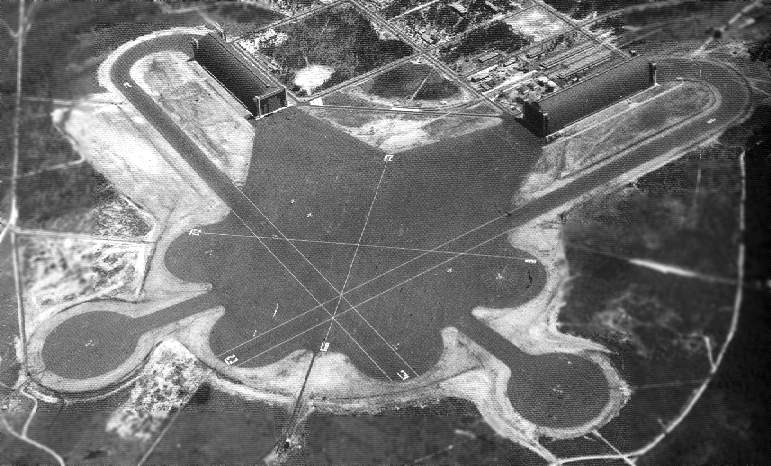
Glynco_GA_WW2

Those of you who are familiar with the Flight-19 saga know of the reported radar contact made by the USS Solomons CVE-67 December 5th 1945, and of the direction finding plots made by the use of high frequency radio waves.  But what you may not be aware of is that there was also allegedly some kind of contact made by Glynco Naval Air Station in Brunswick Georgia as well.  The base itself which is located equidistant between Savannah, GA, and Jacksonville, FL. was a base for Navy Blimps in 1945.  Specifically the home for Patrol Squadron 15 (ZP-15), a subordinate unit of Fleet Airship Wing One at Lake Hurst, New Jersey .

Now I say alleged contact, because no researcher that I am aware of has really focused on the role the station played in the events that day.  It’s no wonder since that contact has been overlooked by the authorities assigned the case back in 1945. The communications record of that day is like swiss cheese and easy to gloss over.  Any indications of what transpired at Glynco NAS are easily lost in the quagmire of  terminology and naval jargon of the official navy report.

However: in “They Flew into Oblivion by Gian J. Quasar”, the author attempts to tackle the issue and relies on a a few key sentences  to reflect the chaos in the ASR office that day and furthermore as indicated below, to make what I believe a rational  suggestion that  Flight-19 flew farther North and was still up in the air later than generally accepted.

“ATC HAS JUST INFORMED BANANA RIVER THAT 5 UNIDENTIFIED AIRCRAFT WERE SEEN AT 8:50 PM AT 245 DEGREES 32 MILES FROM BRUNSWICK, GEORGIA, HEADING 150 DEGREES. ATC IS ALERTING ALL STATIONS. WE HAVE BEEN GETTING THESE REPORTS FROM BRUNSWICK AND JACKSONVILLE……….” (* ) See below

Of course these few transmissions pose more questions than they answer. In this excerpt we need to ask who, (ATC?) is?  Is it Air Transport Command, Air Traffic Control, or someone or something else? Does ‘ seen’ mean they actually physically saw these planes, or were they on the radar or High Frequency Direction Finding? How long had ATC been ‘seeing’ them?  Was there also a military base in Jacksonville FL or was it a civilian station?  At what time did the first message mentioned come in?  How did it come in, via phone or teletype?

If you recall, the teletype was having difficulty operating in the tower that night and  it’s hard to imagine that at 8:50 (20:50 hrs)PM in the middle of Winter, even in Florida that there was that much more light to see by than the rest of the East Coast.

Again,its just one more thing to look into but I think perhaps a key piece to finding the location of the lost planes.

(*)located on pg 205 of the paperback


USS Solomons Found!!

As of last Friday June 10th 2016, I had finally verified the location of the ‘missing’ CVE-67 USS Solomons decklog. A minor success for me, but potentially a huge one for anyone following in my steps and  researching the flight-19 mystery.

The written record covering the official ship activities from May 1945 to June 1946; come to find out is at the National Archives at College Park Maryland.  The chain of custody is relatively short but confusing. The US Navy has what I will call ‘a modern day policy’ that all deck logs from ships that are decommissioned are turned over to the navy and stay with the Navy’s History and Heritage Command (NHHC) for thirty years, after which time they are transferred unceremoniously to the National Archives.

Now you have to imagine what things were like seventy one years ago, at the end of the greatest war ever known.  A time when many soldiers, sailors and airmen had been drafted and wanted to get the heck out of the service of Uncle SAM.  An entire nation was dismantling a war machine never seen in its history.  Many ships were being decommissioned and sold for scrap or mothballed at a furious pace.

It had to be organized chaos, but chaos non the less. Things could get lost or destroyed. According to the Navy, at that time a deck log was basically a bound diary the size of legal paper and could contain up to thousands of pages of paper, and possibly that many entries for that matter.  Not an easy item to loose or over look, but it was a possibility during the frantic deconstruction of the naval service.

It was also a possibility; albeit a slim one, that the ships final commander may have packed it up for a souvenir. Hence one reason for my search for Captain Smith.  It could have been saved by the scrap yard too. These were all avenues I had to look into when I first started my research.

After making inquiries with both NHHC and NARA in Waltham MA- both dead ends- I was starting to realize that finding it was not going to be an easy task. I was beginning to think that I would have to put more time into finding it than the missing flight-19 itself.

Clue: Thirty three years after the war.   Something called Special List #44 was created by the Navy Historical Service the fore runner of the NHHC.  This list indicated what ship deck logs the agency had in storage at that time.  However when I read it, I was disappointed to learn that it only listed the Solomons logbook in inventory annotated everything up to May 1945.

When I inquired with the Navy they indicated that as far as they were aware the list was correct. The end of my search right? Not really. I kept digging.

I got lucky. I was clued into the second logbooks existence by a fellow researcher Jon Myhre who in an email mentioned he had received a copy of the Dec 5th deck log entries from the navy back in the early 1980’s for his book. Someone had had the logbook at one point!

So I had to re-inquire with my contacts at NHHC in Washington D.C. who passed me onto a specialist at NARA and voila!  E-mail confirmation of the logbook.

Now it’s 2016 and many deck log histories have been added to the collection since the 70’s. But Special list #44, really hasn’t changed. Why?  Well in my mind remember in 1978 it was a time before personal computers. Spreadsheets came off of big printers. It wasn’t an easy thing to make changes.  Excel hadn’t even been created yet. Typewriters were still the technology of the day and word processors were just starting to make it into the market.  It’s also a huge list and a lot of man hours would have to go into updating it.

So after all that, is it any wonder that I had such a hard time finding it?  I plan to eventually, hopefully sooner rather than later, visit college park and see it for myself.  Jon did warn me though that there really isn’t much to it. We’ll see.

Book(s) Research Status Update

If you are following this blog, you may or may not be aware, but I am currently researching for two books on the subject of Flight-19.  Both ideas are proving to be very difficult to move forward with for one reason or another.

The First – is a work of Non-Fiction. As much of my blog indicates lately I’ve been trying to track down the second cruise/logbook of the USS Solomons, (CVE-67) circa 1945 – 46 , a point just before the ship was decommissioned and sold for scrap.  One aspect of the search for the log  revolves around the search for Captain Allen Smith Jr. the third and final commander of the ship.  I have a few different options for carrying this part of the plan out.

Starting at my local library and my place of work if possible, I’m going to locate him through the genealogy databases offered to library patrons.  My next step to reach my goal is to approach the Navy for help in finding both.

The Second book; is a matter of Fiction.  I have been scouring different Non-fiction books about the Manhattan project as well as the loss of Flight-19.  Not to give too much away, but I think a good piece of fiction starts with some facts, and a good imagination. From what I have gathered so far, I think a good story can be woven using the two.

I hope in the end you agree.

The Search for Captain Smith (CVE-67)

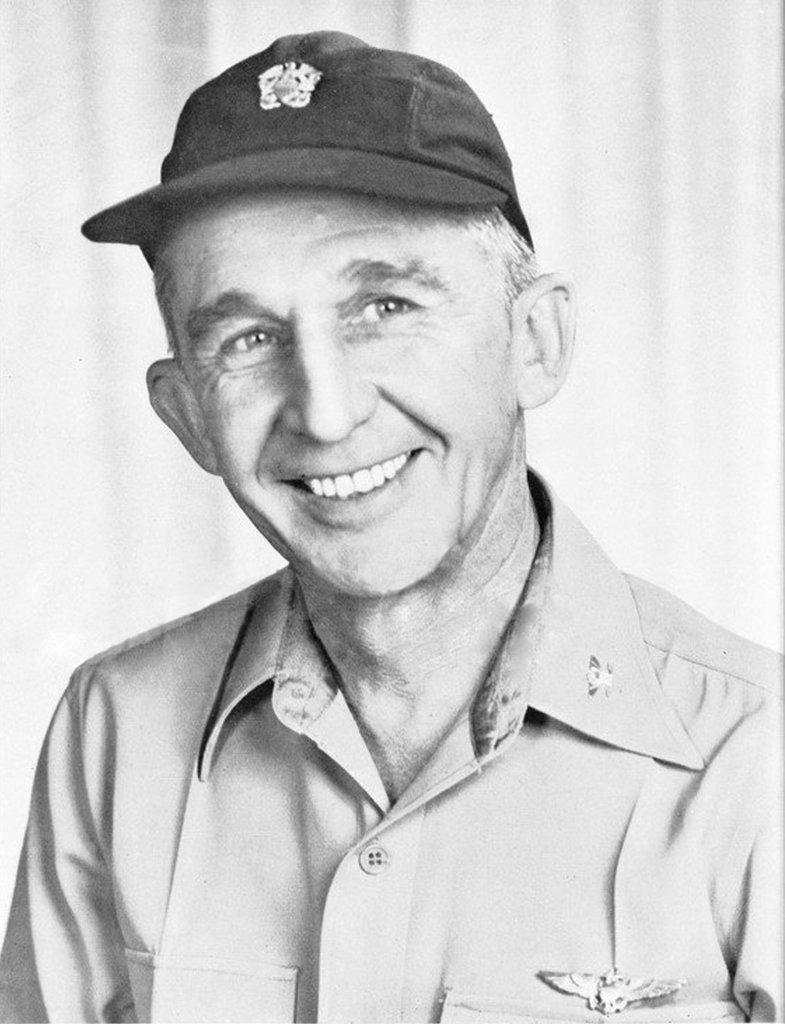
The USS Solomons CVE-67 had three commanding officers during its short existence. The last Captain seemingly, was Allen Smith Jr.(pictured below?) Former skipper of the CVE-90 Thetis Bay. Captain Smith relieved Captain R. S Moss in February of 1946 and at some point before late 1946 signed the ship over for decommissioning at the Boston Navy Yard.

If anyone reading this has any information regarding the location of either Captains or of the second cruise tour/log book, of the USS Solomons (CVE-67) I would very much appreciate your assistance with my research.  Please contact me via email at themacster@comcast.net. – Thank you for your co-operation.

Solomons Search Results 11 December 2015

Waltham, Massachusetts –

After spending about 15 minutes filling out the application for a NARA research card and viewing a PowerPoint introduction to the procedures and policies of the archives, I was allowed access to the secured research room.    The staff were very polite and customer oriented. Because I had requested in advance the materials I wanted to search through there was a 4 shelf cart with the collections ready for me when I arrived.

They staff were very observant of my handling of the materials and my research was conducted in view of a proctor. I did not have to wear gloves; though the possibility to need them was present.

I was fore warned that I would not find what I had indicated I was looking for in my search and for the most part they were correct; ships logs are located in Washington D.C.  But I knew this going in. My goals were to discover if the USS Solomons CVE-67 had been at the Boston Naval Shipyard in 1946, determine if possible where the second ships cruise logbook or any other log book covering the December 5th time frame might be. As a side note, if I could learn anything about the ships layout regarding the radar systems or find anything in the historical, public information or even the port directors logs about the Flight-19 search; it would be a plus.

The Navy’s loss of the planes and crews were big news, and yet there was no indication of any of it that I could find in the 5 hours I spent going through files.

It was not a waste of time though. Fortunately for me I was able to find one item right off the bat.  The USS Solomons, CVE-67 was reported as present in the docks as of July 22nd 1946 as listed in the Boston Naval Shipyard Station Log HC1-95196087. But this log book is a simple verification by the Commanding Officer and Administrative officer, there was no history of the ships condition or release by the Captain.  Of curiosity another ship listed as arriving 11 May 1946 was the USS Barnes CVE-20; another jeep carrier in the area of the Flight-19 search.

Many documents had been declassified and I did learn other items of interest.  On 10/17/1945 just after the war, the Chief of Naval Operations E.J. King forwarded a new chain of command for Fleet Post War Operations.  Of note is the Eastern Sea Frontier,down to Argentia and out to Bermuda, and the Gulf Sea Frontier. Both are indicated to be part of the US Army’s Eastern Defense Command.  All bases within this command are listed as Support Elements bases no. 60-64. primary operational and administrative control to fall to  Admiral King or the CNO. Of the other 6 commands (5 fleets) only the 12th Fleet (Europe) falls under the same control structure.

Other news of note: The Navy was heavily recruiting for pilot recruits around 20 September 1945 and it seems the Army and Navy were both competing to see who would come up with a better plan for National Security. The Navy plan being put forth by Admiral Forrestal himself to Senator Elb Thomas Chair of the Senate Military Affairs Committee.

Waltham NARA Research

My intentions for research in December will be to visit the National Archives in Waltham Massachusetts to look into the following:

Boston Naval Yard

Yard Activity Docking Record (vessel repair / repair in drydock), 1945-46 Shipyard (Station) Logs of the South Boston Naval Annex,
Correspondence Concerning Ships (Ships Files) 1945-46
Public Relations Office Ships’ Historical Files, 1945-1946

Records of the 1st Naval District

Port Director – Vessel Acquisition, Inspection & Disposition Files, (includes photographs), 1945-1947
1945-1946 Convoy Sailing Orders & Related Records, 1944-1945 Pier Office Station Logs, 1943-1945 Correspondence, 1945-1946
General Correspondence (central administrative files known as the “District Files”), 1945-1946\
General Correspondence [Formerly Security-Classified], 1945-1947
1946 Administrative Correspondence, 1945-1946 Historical Data, 1945-1946.

Operations Officer – Logs: Ship Controller Logs (Rough),1944-1945 Ship Controller Logs (Smooth), 1942-1946

Commandant

General Correspondence [Formerly Security-Classified], 1945-1946
General Correspondence (central administrative files known as the “District Files”), 1945-1946

Historical Officer Daily Historical Log (“Significant Headlines”), 1945-1946
Public Information Officer – Publicity & Press Files, 1944-1946

N.A.S Ft. Lauderdale Training Schedule for, Weds Dec 5th 1945.

One of the questions I’ve had since the start of my investigation, and one subject I haven’t seen addressed very thoroughly is: How many planes were in the air that day. How many were in the air after or concurrently with the 14:10 take off of Flight- 19? How many other training or navigation problems flew out of Ft. Lauderdale? Could other planes from other ‘problems’ still have been in the air after 17:30 when darkness fell?  It is important to be able to eliminate inaccurate plane sightings.

I’ve read recently in Gian Quasars, “They Flew into Oblivion”that there were seemingly 27 Flights of planes scheduled to take off from Fort. Lauderdale Naval Air Station that day 69 years ago.  This is important to note, because though, Flight-19 (FT-28 Lt. Charles C. Taylor) was late taking off, (Flight- 18 Lt. Stoll had taken off approx 20 plus minutes earlier) there were allegedly seven other flights of aircraft, likely TBM’s scheduled to take off in 20 minute increments, after it.

That would mean that most if not all the other flights, unless scrubbed for some other reason, could have been able to get off the ground before the 15:40(3:40PM) distressed call by Taylor. ( Quasar pg. 120)” Flights 16-27 Were still up at 15:40″

Assuming that each flight had 1 Division, two sections (2 Planes per section) and a trainer, that would suggest that there were possibly up to at least 40 additional Navy training aircraft from Ft. Lauderdale: (not to mention Army or Civilian traffic), in the air along with Flight-19 at the time of its troubled flight.

Which means that the 15:00 (3PM) sighting of 4 TBM’s by the SS Ft. William and quite possibly the 17:50 (5:50) radar sighting of the USS Solomon’s of a group of 4 to 6 aircraft off Flagler Beach FL could have been other flights currently out training.

Out of all these aircraft, only a few reported contact with the flight.  Again, according to Quasar, only two other pilots had radio contact with Taylor. Lt-Cox in FT-87 (Flight 25?)and members of Flight 22?  So did no other pilot report anything in their after action briefings? Larry Kusche states in his book “The Disappearance of Flight – 19” (Pg.11) J.B. “Obie” O’Brien, Melvin Pike, and Nathan Puffer,  three other pilots up at the time heard enough of the conversation to determine someone was lost and didn’t know which way to go.”  Other than these, there were allegedly no others reported to help fill the gaps in the official Naval Inquiry Radio log evidence.


Not Widely Knowns about Flight 19

People reading about the disappearance of Flight 19 are always mesmerized by the mystery behind the circumstances. It’s what drew me to it when I was a kid.  Though it is highly unlikely that anything super natural can be associated with the loss of the planes.  There are several little known and little talked about facts about the case.

1.) All the Pilots and most of the crews were part of an advanced training unit all having been transferred from Naval Air Station Miami to Naval Air Station Fort Lauderdale including the Instructor. Taylor was the Navigational Instructor at Miami NAS.

2.) According to Larry Kusche a Flight – 19 investigator in his book “The Disappearance of Flight – 19 The Flight Leader and Instructor Lt. Charles Taylor had trained and flown the Florida keys and Bahama areas for months previous to Dec 5th as part of a Anti -Submarine Patrol flying the OSU-2 Voight King Fisher.

3.)All the aircraft were fitted out with different radio and direction finding equipment. Some of the planes even had radar!

4.)Because of the growing desertions in the ranks, and the morale problems created by slow repatriation of servicemen at the end of the War, personnel strength was at a low and aircraft and equipment were not maintained to standards.

5. There were three Bogue Class Escort Air Craft Carriers in the area during the search for Flight 19.  These “Jeep Carriers” as they were called were assisted by Two Destroyers and at least several Escort Destroyers .

It is interesting to note that there were many other vessels in on the search including Army Transport ships and Planes (Yes, the Army had ships) Navy Pt-Boats, Coast Guard Cutters and a myriad of Merchant Mariners and Civilian Ships.  They even used amphibious craft and believe it or not a helicopter to search the coast line for survivors!

6. It was a moonless night, the sun went down approximately at 5:20 PM and there was inclement weather moving in at just about the same time as takeoff.

7. The planes had no marker lights. The Only lights would have been the muted colors from the instrument panel and the flames shooting out of the exhaust.

8. Several crashed Avenger Aircraft have been located over the years from 1948 up to the present time. None have been listed as part of the missing flight. Dozens of Navy aircraft are purported to be sunk off the coast of Florida dating from the War Years.

9. Florida in the time shortly after the War was divided aerially into Two districts North to South.  One Naval, the Eastern Shore and One Army Air Corps (Air Force) the Western Shore. Both were covered by Coast Guard Air Sea Rescue.

10. Again, according to Larry Kusche, Taylor’s first introduction as a training pilot at Ft. Lauderdale was two familiarization hops neither being Navigation Problem 1.  The Flight -19 training hop was his first on that mission plan. The pilots did not have maps with them and after the loss there was a Navigational Plotting board found with a watch in Taylors room.  (Pg 159)

11. His was the only compass reported to be operating erratically.

12. According to Thomas J. Cutler a former Lt. Cmdr U.S.Navy and a prestigious professor at the U.S.Naval Institute in his book, ” A Sailor’s History of the U.S. Navy 2005 (Pg 197) re: The Triangle, ” One of the most interesting facts about this Triangle is that…..where there is no compass variation – both gyro and magnetic compasses are perfectly aligned in this area.”   Basically there is no variation between True and Magnetic North. These lines are known as Agonic Lines.

But of all of these only the vessels with radar are of interest to me at this stage. So I leave you pondering as I have been, why didn’t they find anything?

The Board of Inquiry Report Flight-19 February 1946

To all of you following me on my book research adventure ” Welcome and Bienvenue.”   I came across a piece of gold last night. No not literally. I discovered the location of the USS Solomons CVE-67 Dec 5th, 1945. While reading radio logs I found a transmission giving the coordinates and speed of the vessel. It’s one of the foundation pieces to my research. What’s also indicated, and it’s just an interesting fact, but US Navy Aircraft carriers don’t travel alone. There was at least a small escort of two sweepers of some kind, and an oil replenishment ship nearby as well. None but the Solomon’s seem to have had radar, but there was more likely a destroyer or destroyer escort nearby which may have.

Onto the next page.